
Investors rarely say no because the idea is bad. They say no because the pitch doesn’t show whether their investment will pay off.
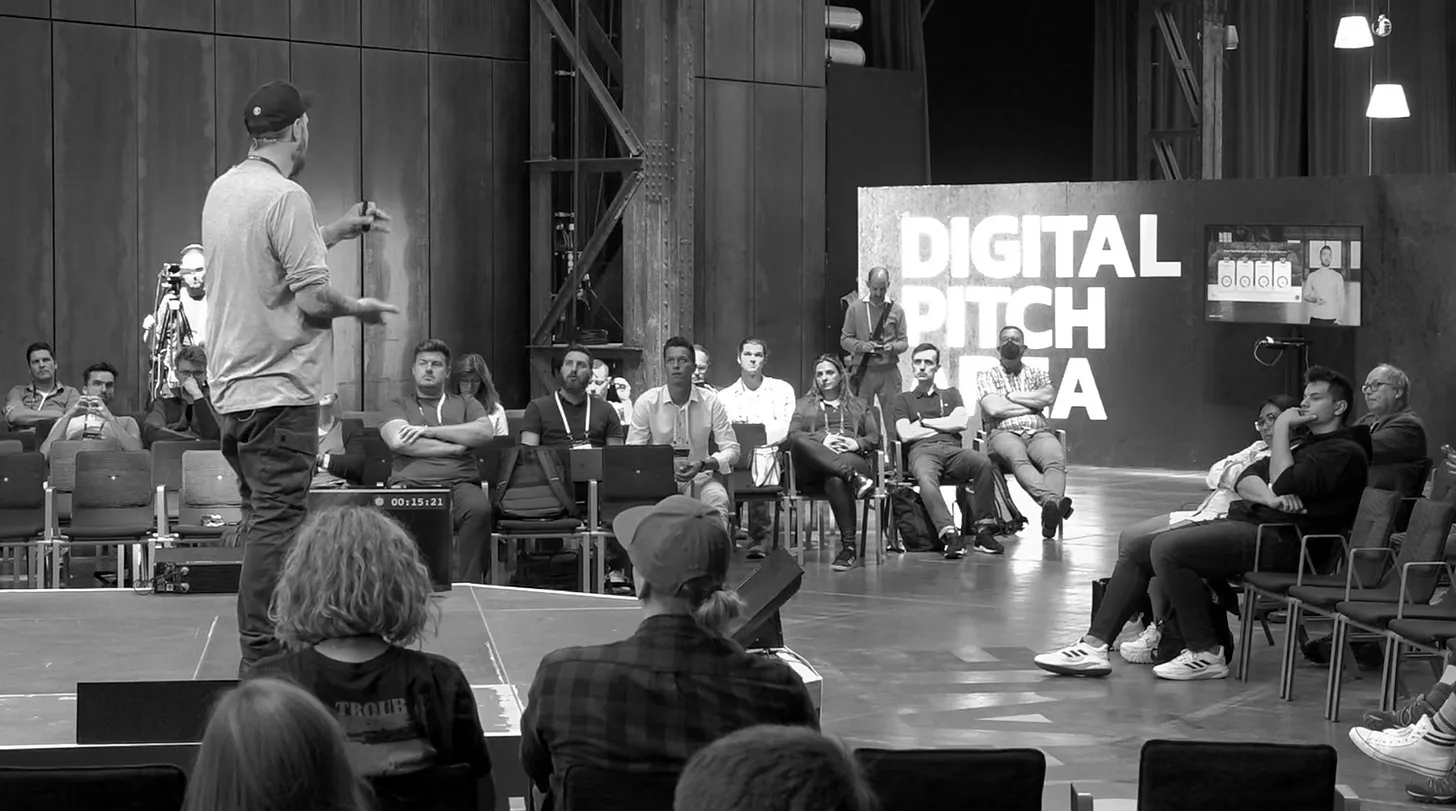
The other day I sat in a pitch event again. Fifteen startups, five minutes per pitch. Great ideas, passionate founders, and still no investment in the end.
The problem wasn’t the quality of the ideas. It was the way they were presented. Many founders think about their pitch from the inside out. We have this technology. We are so passionate. Our product is innovative.
But investors think differently. They think in numbers, risks and returns. And that is exactly where the gap opens up.
What investors really have in mind
Imagine you are an investor. You see hundreds of pitches a year. Most of them fail. Your job is to find the few that make it.
So you ask yourself the same things at every pitch:
- Are there customers who pay?
- How big can this get?
- Why will they win and not the competition?
- Is the team strong enough to see it through?
Investors don’t want to feel your passion. They want to understand whether their investment is worth it.
That sounds harsh, but it is simply business.
The seven things that make your pitch strong
There is no perfect pitch. But there are principles that work, no matter what stage you are in.
1. Show who you change
Don’t just describe your customer. Describe who they become when they use your product. That transformation is what convinces. It’s not the feature that counts, it’s the change in the customer.
2. Have a vision that gives direction
Vision is not a marketing term. A real vision shows how you win in the long run. It gives focus and shows investors that you think beyond the next six months.
3. Be radically different and explain why
Investors don’t invest in copies. They want to know why nobody can simply copy you. Know your competition, not just the direct competitors, but every alternative customers use today. And show how you outmaneuver them strategically.
One principle that helps here is MAYA: Most Advanced, Yet Acceptable. As advanced as possible, but still understandable for the market. That is the balance between innovation and reality.
4. Show that it can scale
Show that you are not developing a product, but a system. That you start in a niche, but can grow from there and become the market leader. Investors invest in potential, not in perfection.
5. Explain your business model clearly
The simplest question, and still many fail here: how do you make money in the long run? If you can’t explain that in two sentences, investors are missing the foundation. Show how you create value and how that value turns into revenue.
6. Prove that people want it
If you have revenue, show it. Returning customers, growth, referrals, all of that lowers the risk immediately. But you can convince without revenue, too.
One example is Liquid Death.
At first, nobody wanted to invest in canned water. So founder Mike Cessario took part of his budget and produced a video. He pushed it on social media until it had millions of views and proved that demand exists.
Only then did the investors come. Don’t say that people want your product. Prove it.
7. Be realistic about your valuation
Investors have had enough of startups that live in their own world. Come with a valuation that fits your numbers. It shows that you know where you stand and that you think long term.
What counts in the end
Investors don’t invest in slides. They invest in people who solve real problems, in a growing market, with a validated solution and the potential to become big.
If you take these seven points into account in your pitch, something decisive happens. You increase your chance of an investment, and you build a startup that works even without an investor.
A good pitch doesn’t sell an idea. It shows that you have understood the system and that you know how the game is played.
One more thought: if you want to go deeper into outmaneuvering your competition, watch my YouTube video “David gegen Goliath” (in German). There I show you how to develop a strategy that lets you prevail, even against bigger players.