
Startups call it
“a new way of thinking”.
This method is the feedback that comes after almost every project. Was sich ändert: Dass ihr danach in der Lage seid, mit eurem ganzen Business euren Markt herauszufordern.

1 · What startups actually fail at
Rarely at the product. The market is full of startups with better products that disappeared anyway, because they sounded like everyone else, could not hold their prices and made the wrong call at the decisive moment. Usually one of two kinds:
Best practice
Copying what worked elsewhere. The problem is in the logic: when everyone does the same thing, nobody is different. AI is speeding this up: what set you apart last year, your competitors copy today in a matter of days. Products, copy, pitches, everything is produced faster and looks more alike. And it hits hardest the startups that ought to stand for the opposite.
Gut feeling without consequence
Decisions made on instinct, with no view of cash flow, pricing or customer value. It feels like founder instinct. It is the fear of saying no.
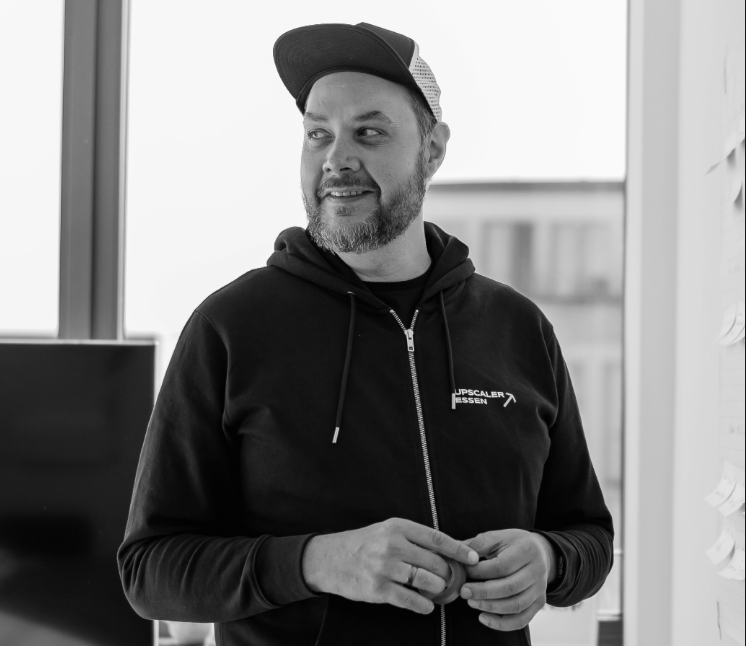
Both routes share the same core. Nobody decides deliberately. That is exactly where the method starts.
Marcel Schubert, founder of burnt2 · Your business is the sum of your decisions
The price you set. The customer you turn down. The feature you cut. Decisions like these determine whether your business makes money.
Five decisions nearly every startup keeps putting off:
“Can we raise the price, and how?”
“Which customers do we say no to?”
“Which feature gets cut?”
“Why does our pitch sound like everyone else’s?”
“Do we follow the trend or our strategy?”
None of these questions has an answer you can look up, and they get decided anyway, under uncertainty, with consequences. Dafür braucht es Urteilskraft. Also erkennen, was eine Entscheidung nach sich zieht, bevor sie getroffen ist.
That ability is getting rare. The faster everything can be produced, the more depends on who can judge what is right.

The method does not answer these questions for you. It gives you the judgement to answer them yourselves. With reasons, focused on customers, with an eye on the numbers.
Marcel Schubert, founder of burnt3 · The four principles
Each principle ends with a question you can put to your team today, without me.

It is never about you. It is about your customers.
Investors do not decide whether you still exist in two years. Customers do, every day. Yet half the scene revolves around how to become interesting to investors. The better question comes from Michael Schrage: who do your customers become through you? Anyone with an answer to that stops selling. They help people buy. Marty Neumeier puts it like this: every company needs a CEO who looks after the company’s goals, and a CBO who looks after the customers’ goals. In most startups nobody does.
When did you last listen to a customer without pitching and without defending yourselves?

The exact opposite.
When everyone does the same thing, the winner is not the better copier. It is whoever is different. The method systematically looks for what your market does not do and places your strategy exactly there. That creates a lead your competitors cannot follow without contradicting themselves.
Say in one sentence why a customer should choose you and not the next one. If you cannot, you do not have a communication problem, you have a strategy problem.
Focus means leaving things out.
More offers, more features, more channels. It feels like progress and is the opposite, because every extra thing dilutes the rest. Strategy is deciding what not to do, as Michael Porter put it. The measure for that is not your preferences, it is your customers.
What do you leave out that your competitors would not leave out?

Without numbers it is all talk.
A strategy that does not add up is not a strategy. The most common route there is a low price at the start, meant to bring customers quickly. It does bring them. They just pay too little, and raising the price later is close to impossible. Growth without margin is not growth, it is a party somebody pays for later. Usually you.
If you had twice as many customers tomorrow, would you make money or lose it faster?
You can ask these four questions today, and you should. But knowing changes nothing yet. The thinking only takes hold once you apply it to your own business. To your numbers, your competition, your next pitch.
4 · The foundation: Marty Neumeier
The method does not rest on LinkedIn wisdom. Its foundation comes from Marty Neumeier, who helped Apple, Google, HP, Adobe and Patagonia build their brands in Silicon Valley. His THE BRAND GAP has been read over 20 million times.
Marcel is behind the German editions of all three standard works, in close exchange with the author. In all three books Marty let him write a foreword of his own, giving German-speaking readers his own perspective.
Branding means making sure as many people as possible think the same thing about you. Das lässt sich nicht mit einem Logo herstellen, sondern nur über Entscheidungen: wen ihr ansprecht, was ihr verlangt, womit ihr Geld verdient. Deshalb arbeitet diese Methode am Geschäftsmodell und nicht an der Gestaltung. Die Brand ist das Ergebnis.
At Level C, the institute run by Neumeier and his team, this is called thinking like an architect. An architect does not build the individual parts. He designs how they fit together. Your offer, your prices, your partners, what your customers experience: every part can be right on its own and together still add up to no advantage. That is exactly what a sprint works on.
What has come of it over the years in the German-speaking startup scene, is on this page.
 The Brand Gap.The bridge between business strategy and customer experience.
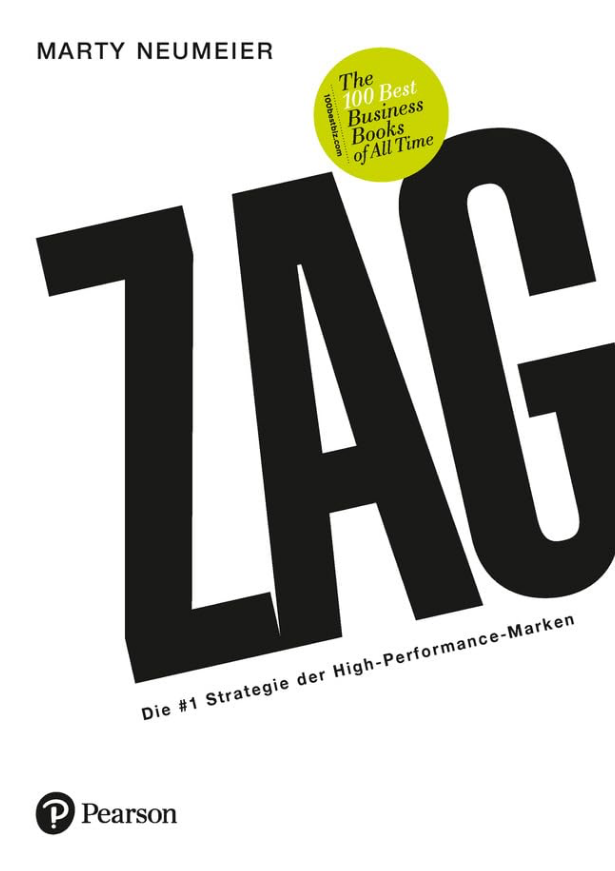 Zag.From sameness to singularity.
 The Brand Flip.Customers in focus.
5 · What it feels like
Honestly: uncomfortable, for two reasons. Marcel does not ask the questions you want to hear. Er arbeitet an eurem Business mit, und wo ihr ausweicht, bohrt er nach. Der zweite Grund wiegt schwerer: Anders zu sein ist anstrengender, als mitzulaufen. Best Practice fühlt sich sicher an, weil es schon jemand gemacht hat. Genau deshalb bringt es euch keinen Vorteil.
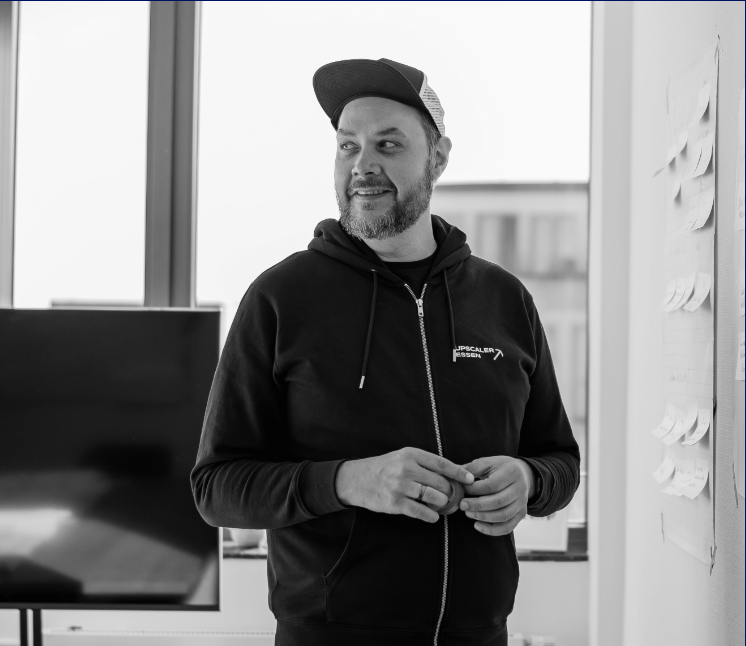
I go where it hurts. With one aim: that your startup has the best possible chance to grow.
Marcel Schubert, founder of burntBei dir ist noch eine Frage offen?
It is the same method everywhere. The difference is the depth and who does the work. If something is missing here, send an email. No need to book a slot for that.
Frage stellen